FROM THE BENCH
Porcelain Fused to Metal (PFM) Crowns: Strength, Esthetics & When to Use Them
Learn what Porcelain Fused to Metal (PFM) crowns are, their benefits, limitations, and when dentists still choose PFMs for reliable strength and fit.
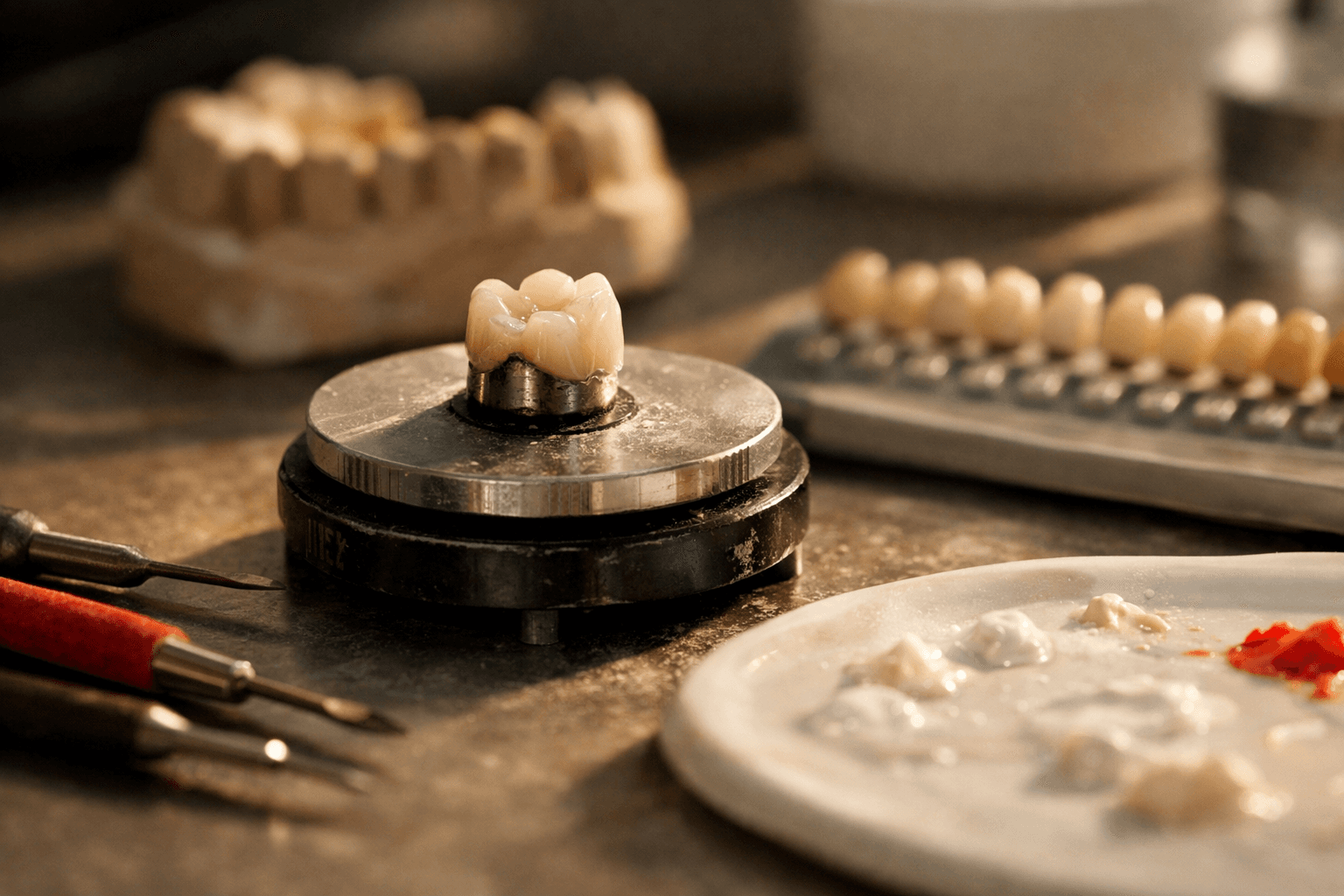
Common PFM Design Errors - and How a Quality Lab Prevents Them
Porcelain-fused-to-metal (PFM) restorations continue to play an important role in prosthetic dentistry - particularly in posterior cases, long-span bridges, and patients with heavy occlusal forces. While newer all-ceramic materials have gained popularity, PFMs remain a reliable and predictable option when they are designed correctly.
Many PFM failures, however, are not material-related - they are design-related. Understanding the most common PFM design errors can help clinicians reduce remakes, improve restoration longevity, and achieve better functional and esthetic outcomes.
Below, we outline the most frequent PFM design issues and explain how a quality dental laboratory helps prevent them.
1. Inadequate Tooth Reduction
The Problem
One of the most common causes of PFM failure is insufficient tooth reduction, particularly on the occlusal and facial surfaces. When there is not enough space to accommodate both the metal substructure and porcelain layering, the laboratory is forced to compromise.
This often results in:
- Thin porcelain that is prone to chipping
- Over-contoured restorations
- Compromised occlusal anatomy
How a Quality Lab Prevents It
A proactive dental lab will:
- Evaluate scans or impressions immediately upon receipt
- Identify and flag insufficient reduction before fabrication begins
- Recommend reduction guides or alternative materials when appropriate
Early communication helps prevent costly remakes and unnecessary chairside adjustments.
2. Improper Margin Design
The Problem
PFM restorations are highly sensitive to margin design. Poorly defined or inappropriate margins can lead to:
- Marginal gaps
- Esthetic issues such as metal show-through
- A compromised cement seal
Common problems include margins that are too thin, uneven, or incompatible with PFM material requirements.
How a Quality Lab Prevents It
An experienced lab will:
- Assess margin clarity and overall design suitability
- Recommend chamfer or shoulder margins when indicated
- Strategically design porcelain margins in esthetic zones
This approach supports both strength and esthetics without overextending porcelain.
3. Over- or Under-Designed Metal Substructures
The Problem
The metal framework serves as the foundation of a PFM restoration. Poor framework design can result in:
- Porcelain chipping due to inadequate support
- Excess metal visibility
- Inconsistent porcelain thickness
Both overbuilt and underbuilt frameworks create stress concentrations that compromise long-term success.
How a Quality Lab Prevents It
Quality labs design metal substructures to:
- Provide uniform porcelain support
- Maintain ideal and consistent porcelain thickness
- Eliminate sharp angles and stress-inducing geometries
Modern CAD/CAM workflows allow precise control over framework design, significantly reducing human error.
4. Occlusal Design Errors
The Problem
PFM restorations - especially in posterior regions - must withstand significant occlusal forces. Common occlusal design mistakes include:
- Heavy centric contacts placed directly on porcelain
- Inadequate occlusal clearance
- Failure to account for parafunctional habits such as bruxism
These errors often lead to porcelain fracture, wear, or premature failure.
How a Quality Lab Prevents It
A detail-oriented lab will:
- Design occlusion based on opposing dentition and bite records
- Recommend metal occlusal surfaces when clinically appropriate
- Adjust contact points to distribute forces evenly
This is particularly critical for bruxers and implant-adjacent restorations.
5. Ignoring the Esthetic Limitations of PFMs
The Problem
While PFMs can provide acceptable esthetics, they have inherent limitations - especially in high-smile or anterior zones. Problems arise when these limitations are not considered during treatment planning, leading to:
- Gray or dark gingival margins
- Reduced translucency
- Patient dissatisfaction
How a Quality Lab Prevents It
A quality lab collaborates closely with clinicians to:
- Identify esthetic priorities early in the case
- Recommend porcelain margin designs or alternative materials when appropriate
- Set realistic expectations for shade, value, and translucency
Material selection should always be case-driven, not default-driven.
6. Lack of Communication Between the Dentist and the Lab
The Problem
Many PFM complications stem from incomplete prescriptions or unclear expectations. Missing or unclear information may include:
- Occlusal scheme preferences
- Esthetic concerns
- Functional risks such as bruxism or implant adjacency
How a Quality Lab Prevents It
Strong labs prioritize communication by:
- Reviewing prescriptions for clarity and completeness
- Asking targeted follow-up questions when information is missing
- Offering case planning support prior to fabrication
This collaborative approach reduces surprises and improves clinical outcomes.
Why Lab Expertise Matters in PFM Prosthetic Design
PFM restorations require a careful balance of engineering, esthetics, and clinical awareness. While material science plays an important role, design execution and laboratory expertise are often the determining factors in long-term success.
At Dani Dental Laboratory, PFM cases are reviewed with a focus on:
- Proper tooth reduction and margin design
- Framework support and porcelain thickness
- Occlusal function and patient-specific considerations
This attention to detail helps clinicians deliver predictable restorations while minimizing remakes.
Final Thoughts
Porcelain-fused-to-metal restorations remain a valuable tool in prosthetic dentistry - but only when they are designed correctly. By understanding common PFM design errors and working with a quality dental lab that prioritizes communication and precision, clinicians can continue to rely on PFMs for durable, functional results.
When questions arise around PFM case selection or design considerations, partnering with an experienced lab can make all the difference.
GO DEEPER
The full procedure, start to finish
This post is one decision inside a larger workflow. Read the procedure pillar for the complete picture: indications, materials, turnaround, and how we build it.
KEEP READING
More from the bench
REQUEST A DOCTOR KIT
Want this on your own case?
Request a Doctor Kit and put a real case in our hands. We mail RX pads, a shade guide, and pre-paid shipping for your first three cases. No call, no contract.